

Why switch to Mac?
Do it like the big boys. IBM, SAP and Cisco have all introduced employee choice programmes in recent years. And when you let end-users choose, they logically go for the best user experience: Correct, Apple!
Both at IBM and Cisco, this switch was managed by Fletcher Previn, the CIO on duty. One of his most famous quotes on this topic is:
“I’ve said it before, when did it become OK to live like the Jetsons at home, but the Flintstones at work?”

This illustrates two things: 1. the high user experience and service expectations from the B2C market are fully percolating into the business environment. 2. Apple Mobile Device Management has long been Enterprise ready. Even better, Mac is often the best solution.
Why work on less potent equipment than what we consider the standard in our private lives? For up-and-coming generations, it's even a deal-breaker. No Mac? No way!
The most important arguments to switch to Mac
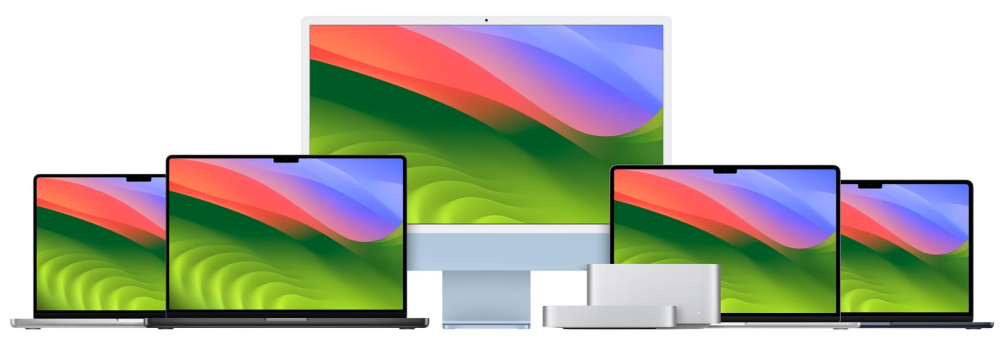
1. Mac is user-friendly & future-proof
- ONE ENVIRONMENT: the ability to switch seamlessly between mobile and computer - as well as the smooth interchangeability of data between devices and with others - leads to increased collaboration, creativity and productivity.
- LESS DOWNTIME: there are far fewer technical issues with Apple devices, so employees work more efficiently and experience less frustration.
- LONGER LIFESPAN: Apple devices last a lot longer and continue to perform optimally for longer. This quality also results in a much higher resale value after 3 or 4 years.
- APPLE'S TECH IS SUPERIOR IN ITS PRICE RANGE. The M-generation chips have already proven their worth and they are also the only consumer devices that are AI-ready.
- THE IMPORTANCE OF EMPLOYEE HAPPINESS - both in the employee's perception and in the HR department's reach in the War For Talent - cannot be overstated.
2. Mac is safer
In Apple devices, security & compliance are inherently linked to the user experience.
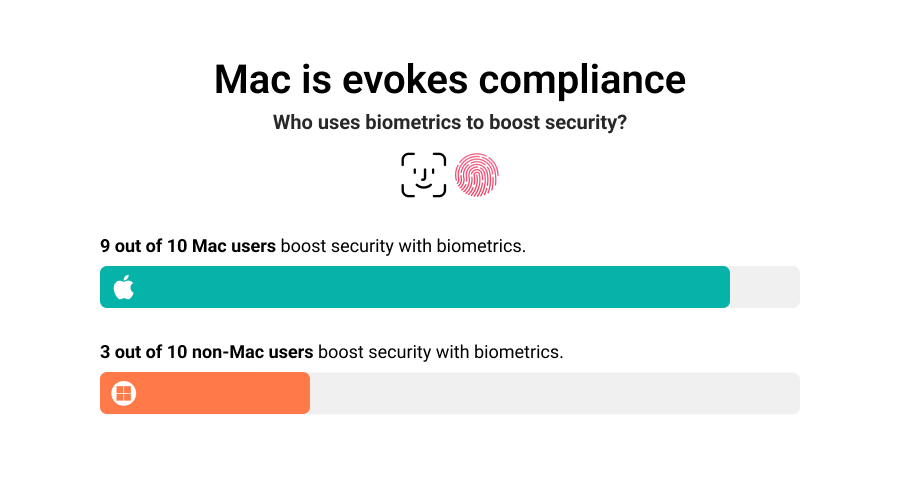
- BIOMETRICS such as fingerprint scans or facial recognition serve both as login and multi-factor authentication simultaneously. With Windows devices, this is still often a choice, that remains too often ignored.
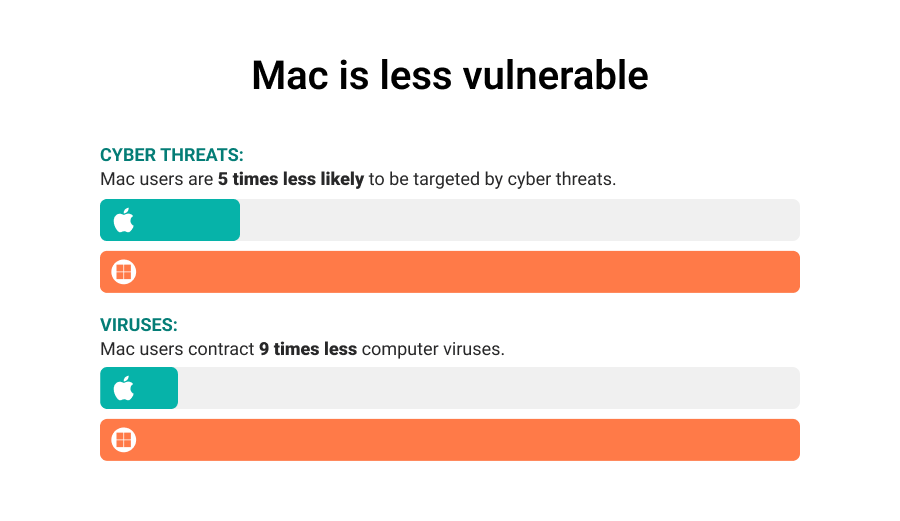
- MAC ARCHITECTURE IS LESS VULNERABLE. Apple closes down its devices considerably, making it harder to develop hacks for them. No fun for extreme developers who like to experiment in the fringes, but safer for the regular user.
- USERS ARE PROTECTED FROM THEMSELVES. This has to do with the previous point, of course. Most people who work on Mac tell us, "I really don't know anything about computers, it just has to work". Following that user train of thought, Apple protects users from their own mistakes.
- Extensions to ENDPOINT SECURITY SOLUTIONS are possible, fully tailored to the Apple ecosystem. Think of VIP business profiles going on a business trip to China with their iPhone, tablet and or laptop. "Shouldn't we provide an extra layer there?"
3. Mac saves money
And because Mac is more user-friendly, more resistant, more secure and easier to manage, the TCO looks a lot more interesting at 3 years.
The IT cost per user constitutes more than the pure purchase price of his tools. Depending on the type of device, Apple devices are (on a 3-year lead time) between €135 and €575 cheaper than a comparable Windows device.
Where are these differences?
- Higher residual and therefore better resale value.
- No need for additional Operating System licenses, which are included.
- The built-in security of each device, reduces the need for additional software licenses.
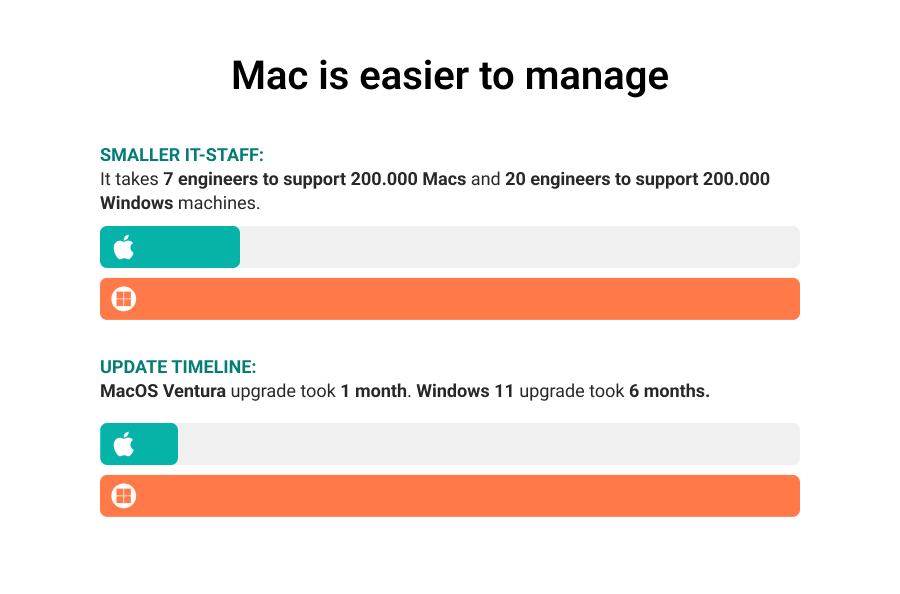
- Automated installation, onboarding and deployment reduce lead time and manpower requirements.
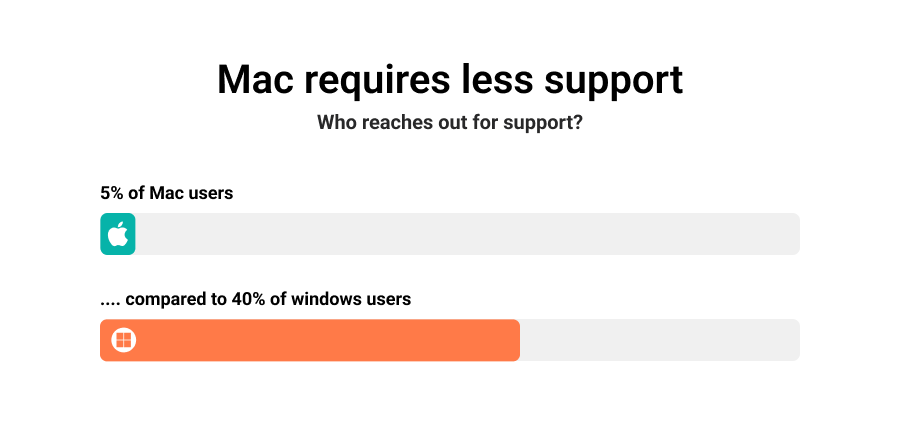
- The limited number of tickets saves support interventions and thus manpower.
IT managers' concerns about opportunities or limitations?
Read more >
What did we learn from the switch to Mac at IBM, SAP and Cisco?
The IBM and Cisco transitions in particular measured minutely the operational differences between Mac and Windows devices. Here are some interesting findings:
Apple success stories